
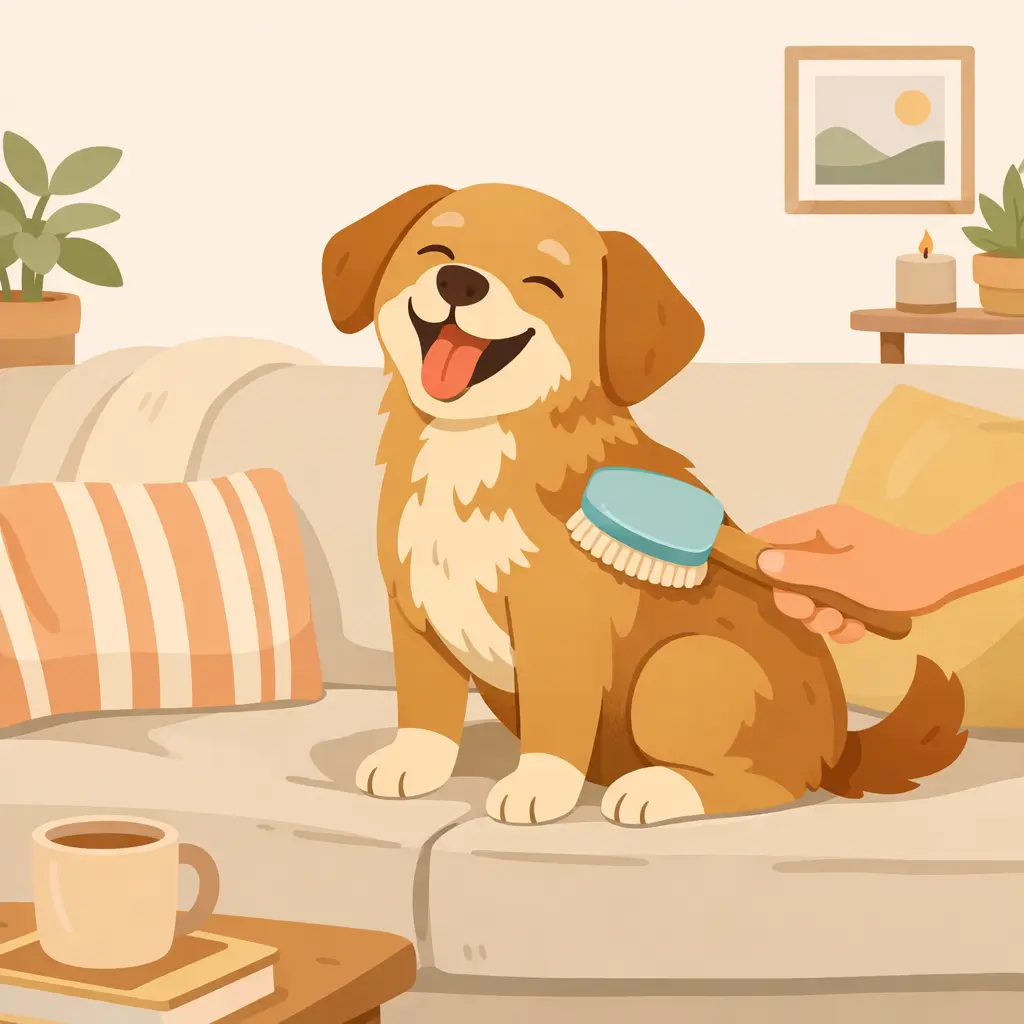
Brushing your dog seems simple until you buy the wrong tool. Then suddenly grooming feels like a chore, your dog gets anxious, fur still ends up on your clothes and sofa, and sessions become stressful.
I’ve lived with my dog for more than six years, and if there’s one thing I’ve learned, it’s this: a dog brush isn’t just a brush. The right one can make grooming calm and easy. The wrong one can make your dog uncomfortable and make you doubt whether home grooming is even worth the effort.
This guide is written for everyday dog owners not professional groomers. And it’s based on research, real feedback from other owners, and honest experience. If your goal is:
- less shedding
- calmer grooming sessions
- a clean coat without mats
- and tools that actually work
…then you’re in the right place, this is the right article of How to Choose the Right Dog Brush.
Why Brushing Matters (and It’s Not About Looking Pretty)
A brush helps with:
- coat health
- skin comfort
- circulation
- reducing shedding
- preventing matting
- hygiene
Yes, it helps appearance—but that’s not the main goal.
A poorly maintained coat:
- traps dirt and bacteria
- can cause itching and irritation
- leads to painful knots and mats
- increases shedding on furniture
- affects temperature regulation
A well-brushed coat:
- releases loose fur naturally
- keeps skin breathing
- avoids tangles and painful mats
- improves your dog’s comfort
- makes baths easier
Brushing is health, comfort, and bonding—not beauty alone.
Coat Types Matter (and Decide Which Brush You Need)
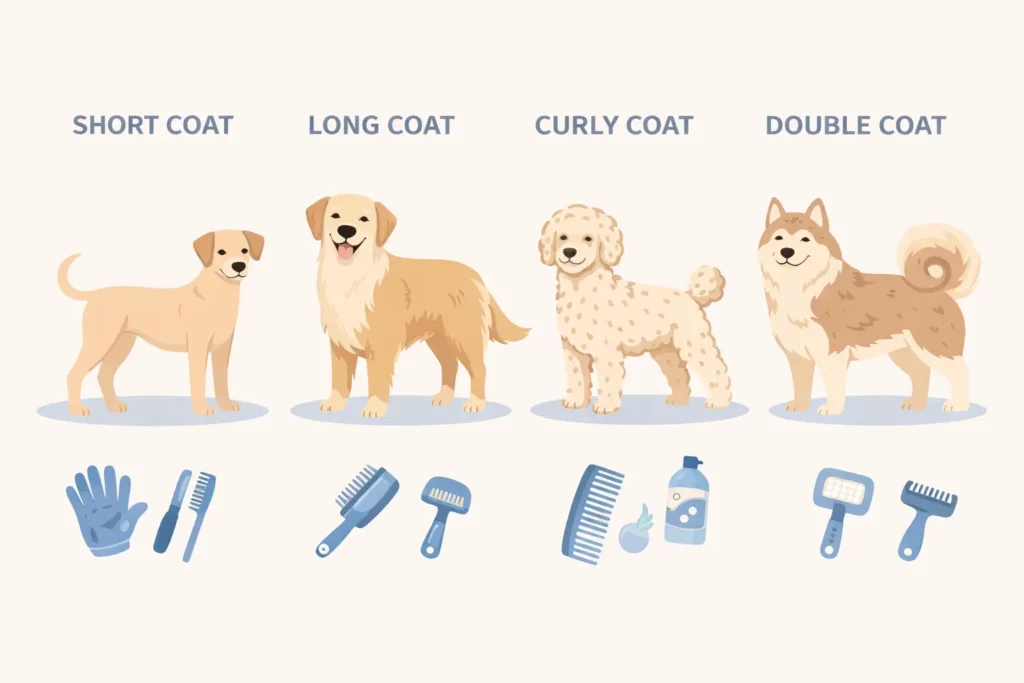
If you learn just one thing from this guide, let it be this:
The brush must match the coat type.
Here are the four main coat categories:
1️⃣ Short & Smooth Coats
Examples:
- Beagle
- Boxer
- Dalmatian
Needs:
- gentle bristle or rubber
- light deshedding
Avoid:
- aggressive slickers
2️⃣ Long & Silky Coats
Examples:
- Shih Tzu
- Yorkshire Terrier
- Afghan Hound
Needs:
- slicker brushes
- detangling
- mat prevention
Avoid:
- harsh deshedding tools
3️⃣ Double Coats
Examples:
- German Shepherd
- Husky
- Golden Retriever
Needs:
- undercoat removal
- deshedding tools
- brushes with depth
Avoid:
- tools designed only for topcoat
4️⃣ Curly & Wooly Coats
Examples:
- Poodle
- Bichon Frise
Needs:
- slickers
- detangling
- mat control
Avoid:
- simple bristles
A brush that works for a Husky is not ideal for a Shih Tzu.
This is why reviews on the internet contradict each other—they ignore coat type.
Types of Dog Brushes and What They Actually Do
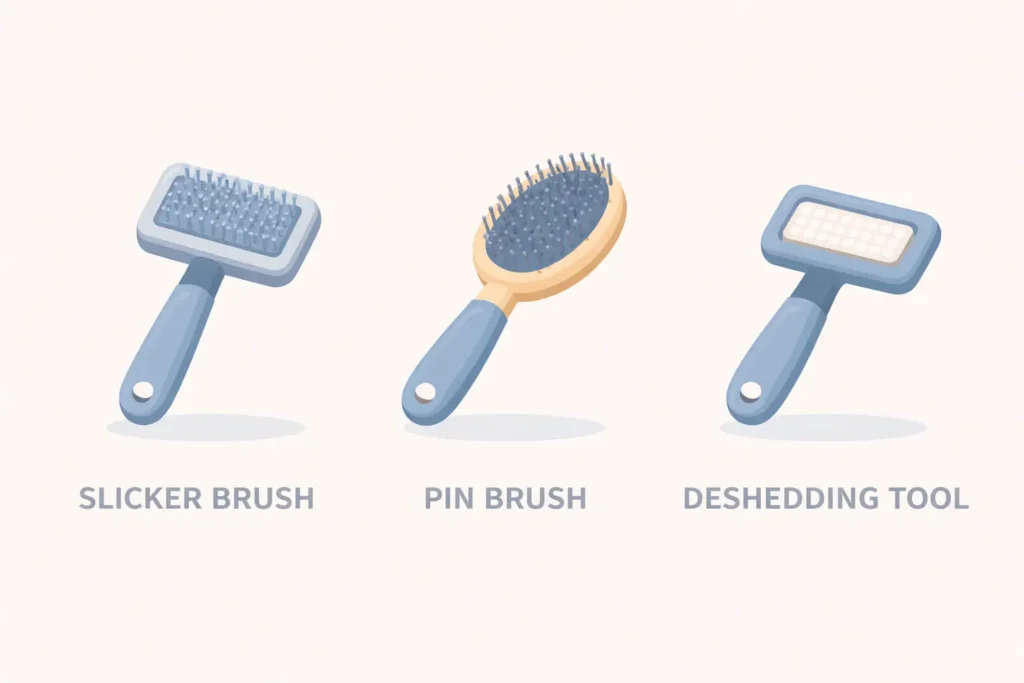
Slicker Brush
Best for:
- long coats
- curly coats
- matting control
Pros:
- deep reach
- detangles well
Cons:
- can scratch if used wrong
Pin Brush
Best for:
- finishing
- daily maintenance
Pros:
- gentle
- comfortable
Cons:
- not great for shedding
Bristle Brush
Best for:
- short coats
- shine finishing
Pros:
- very gentle
Cons:
- no matting power
Deshedding Tool (undercoat rake)
Best for:
- double coats
- seasonal shedding
Pros:
- removes loose undercoat
Cons:
- misuse can irritate skin
Rubber Brush
Best for:
- sensitive dogs
- first-timers
- bath brushing
Pros:
- safe & comfy
Cons:
- low detangling power
Comfort & Safety (Most Owners Forget This)
Brushing should NOT:
- pull
- snag
- scratch
- cause fear
Signs the brush is wrong:
- dog moves away
- stiff body language
- whining or lip licking
- avoiding you
Signs the brush is right:
- relaxed posture
- tail neutral or wagging
- leaning into brush
If your dog has sensitive skin:
- rubber
- bristle
- soft slicker
are safest starting points.
Grooming Dogs with Anxiety or Fear
If your dog gets nervous:
- brush short sessions first (1–2 min)
- use treats
- avoid noisy or sharp tools
- introduce brush gradually
- let the dog sniff and see it
A calm dog learns faster.
An anxious dog just tolerates.
Tools don’t fix fear alone routine does.
Home Grooming Routine
A Simple Home Grooming Routine (Beginner Friendly)
- let the dog see and sniff the brush
- start with gentle strokes on easy areas (shoulders)
- avoid sensitive spots initially
- reward calm behavior
- build up gradually
Beginner Mistakes to Avoid
- brushing only topcoat
- using wrong brush for coat
- stopping when mats form
- brushing dry mats aggressively
- skipping undercoat removal
- long sessions too early
Correct routine:
- frequent
- short
- gentle
- coat-appropriate
Quick Brush-to-Coat Matching (Bookmark This)
- short coats → bristle / rubber
- long coats → slicker
- curly coats → slicker + detangle
- double coats → deshedding
- sensitive skin → rubber
- anxious dogs → rubber + soft pin
This single chart solves 80% of confusion.
How to Test a Brush at Home
Before brushing your dog:
1️⃣ run brush on your arm
2️⃣ test pressure
3️⃣ check comfort
If it scratches you
→ it scratches them.
Brushing Schedule & Frequency
How Often Should You Brush Your Dog?
Brushing frequency depends mostly on coat type:
- short coats → 1–2 times per week
- long coats → 3–4 times per week
- curly coats → every 2–3 days
- double coats → 2–3 times per week during shedding seasons
Short, frequent sessions are better than long and stressful ones.
Cost Expectations
How Much Should a Good Brush Cost?
Most home-appropriate brushes range between $10 and $35.
Higher price doesn’t always mean better—what matters is comfort and coat compatibility.
Pros & Cons Table (Overview)
| Brush Type | Best For | Pros | Cons |
|---|---|---|---|
| Slicker | long/curly | detangles | risk of scratching |
| Pin | finishing | gentle | weak on mats |
| Bristle | short coat | soft | no undercoat |
| Deshedding | double coat | removes loose fur | misuse irritation |
| Rubber | sensitive | safest | low detangling |
Final Verdict — Choosing the Right Brush
If your dog has a:
- short coat → bristle or rubber
- long coat → slicker
- double coat → deshedding tool
- curly coat → slicker + detangle
- sensitive skin/anxiety → rubber
If you want one simple rule:
Match brush to coat, and comfort comes first.
Once you understand coat type and brush purpose, home grooming becomes easier. Sessions get calmer. Shedding reduces. And you and your dog actually enjoy the routine.
For deeper comparisons, you can check our:
Buying Guides , Reviews , AboutAnd later, tool-specific reviews will help you choose exact products based on this foundation.