
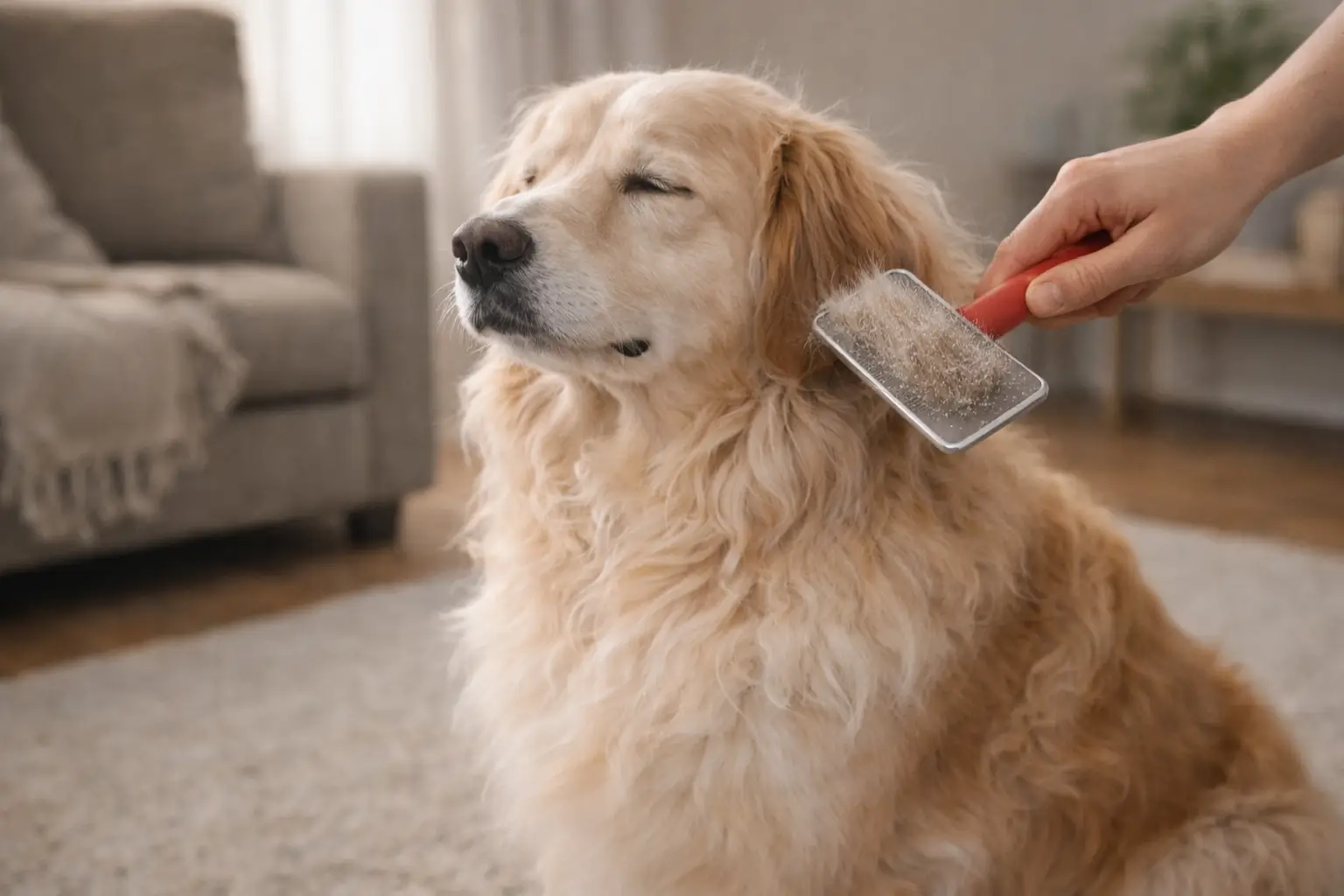
Long-haired dogs are beautiful, but anyone who lives with one knows the reality. Tangles form fast, loose hair spreads everywhere, and a missed grooming session can turn into knots that are painful to remove. Choosing the wrong brush makes things worse, not better. The right brush, used consistently, can completely change how grooming feels for both you and your dog.
This guide focuses on the best brushes for long-haired dogs, not based on hype, but on real grooming experience, coat science, and what actually keeps dogs comfortable at home.
Why Long-Haired Dogs Need the Right Brush
Long coats trap loose hair easily. Unlike short coats, hair does not fall away on its own. It tangles, mats, and tightens close to the skin. Over time, this causes discomfort, itching, and even skin infections.
A proper brush does three things:
- removes loose hair before it tangles
- prevents mats from forming near the skin
- spreads natural oils for coat health
Using the wrong brush can pull hair, break strands, or scare your dog away from grooming altogether.
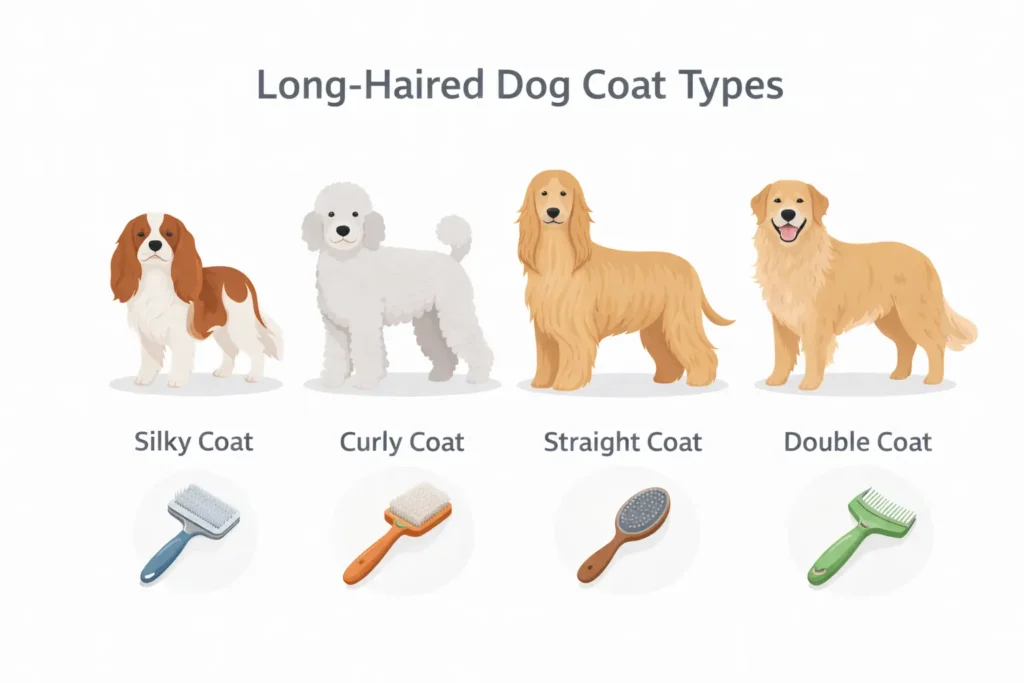
Understanding Long-Hair Coat Types
Not all long-haired dogs have the same coat.
Some common long-hair coat categories:
- Straight long coats (Maltese, Afghan Hound)
- Wavy coats (Golden Retriever, Collie)
- Curly long coats (Poodles, Doodles)
- Double coats with long guard hair (German Shepherd, Husky mix)
Each coat type responds differently to brushes. This is why a one-brush-fits-all approach usually fails.
The Best Brush Types for Long-Haired Dogs
Slicker Brushes
Slicker brushes are one of the most effective tools for long hair when used gently.
Best for:
- removing surface tangles
- light mat prevention
- daily or frequent grooming
What to look for:
- soft, flexible pins
- curved head
- cushioned base
Avoid slickers with stiff pins, as they can irritate the skin.
Pin Brushes
Pin brushes look similar to human hairbrushes but are designed for dog coats.
Best for:
- finishing grooming
- detangling without pulling
- dogs with fine or silky coats
They are gentle and ideal for dogs that dislike aggressive brushing.
Undercoat Rakes
For long-haired dogs with double coats, undercoat rakes help remove loose hair beneath the surface.
Best for:
- shedding seasons
- thick coats
- heavy hair buildup
They should be used carefully and not every day.
Dematting Tools
These are not everyday brushes but problem solvers.
Best for:
- small mats
- tight tangles
They should be used sparingly and never rushed.
How to Choose the Right Brush for Your Dog
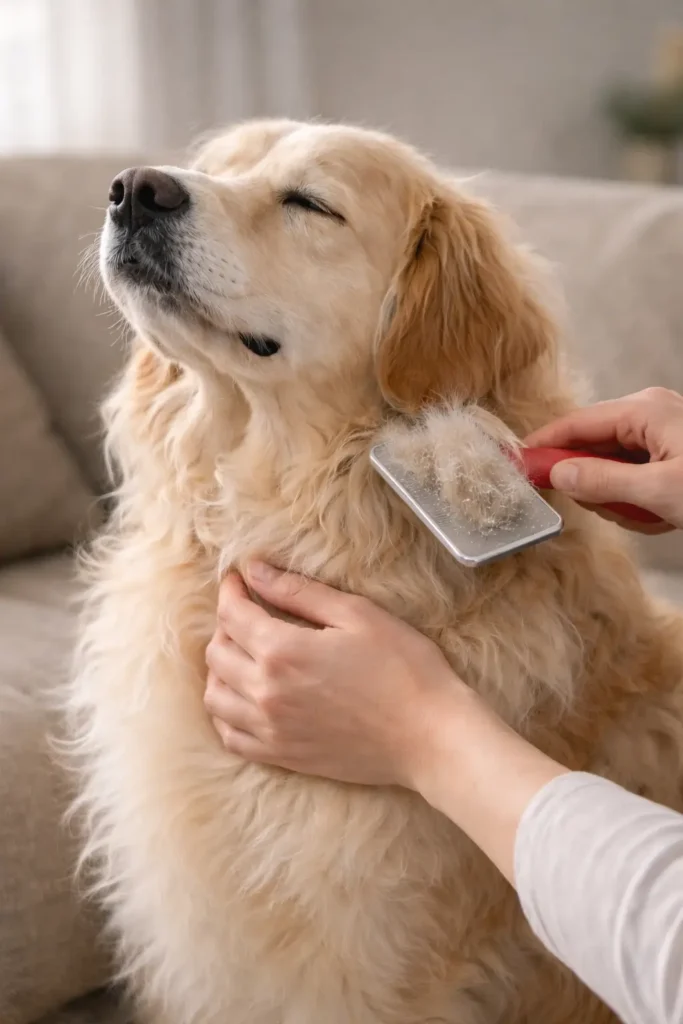
Ask yourself:
- Does my dog have a double coat or single coat?
- Is shedding heavy or moderate?
- Does my dog tolerate brushing well?
- Are mats already forming?
For most long-haired dogs:
- Slicker brush for regular grooming
- Pin brush for finishing
- Undercoat rake during shedding season
Starting gentle and building tolerance matters more than buying expensive tools.
Proper Brushing Technique for Long Hair
Technique matters more than force.
Best practices:
- brush in the direction of hair growth
- use short, controlled strokes
- start from the ends and work toward the roots
- stop if your dog shows stress
Never rush through mats. If you feel resistance, slow down.
A calm dog learns to trust grooming. That trust is more valuable than any tool.
Grooming Schedule for Long-Haired Dogs
Consistency prevents problems.
Recommended routine:
- light brushing every other day
- deeper grooming 2–3 times per week
- extra sessions during shedding seasons
Short sessions work better than long ones. Five minutes daily beats one stressful hour per week.
Common Mistakes to Avoid
Many owners unintentionally make grooming harder.
Avoid:
- brushing dry mats aggressively
- skipping grooming for weeks
- using human hairbrushes
- brushing when the dog is anxious
- ignoring sensitive areas
Grooming should feel predictable and safe.
Benefits Beyond Appearance
Regular brushing:
- reduces shedding at home
- prevents skin irritation
- improves coat shine
- strengthens the bond between dog and owner
- reduces grooming anxiety
Dogs often relax once grooming becomes routine.
When a Brush Is Not Enough
If mats are severe or skin is irritated, professional grooming may be necessary. Home grooming works best when maintenance starts early.
Final Verdict
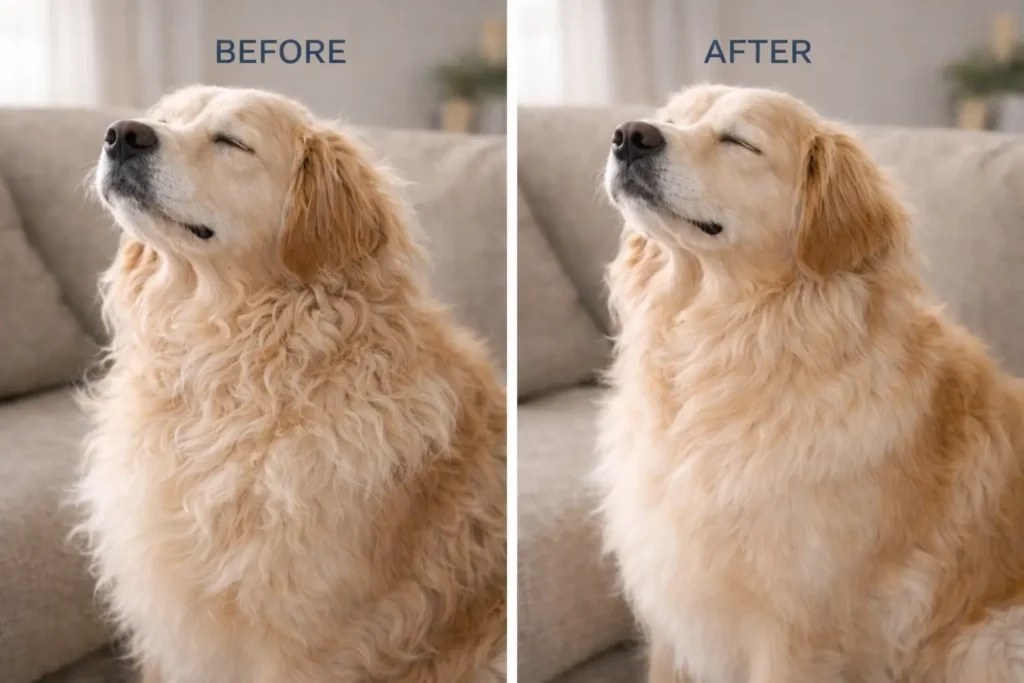
Long-haired dogs need brushes that respect their coat and comfort. Slicker brushes, pin brushes, and undercoat rakes each play a role when used correctly. The best brush is not the strongest one, but the one your dog accepts calmly.
With the right tools and a consistent routine, grooming stops being a struggle and becomes part of daily care.
Short-haired deshedding article.
The Table.
| Brush Type | Best For | Coat Type | Grooming Frequency | Comfort Level |
|---|---|---|---|---|
| Slicker Brush | Daily detangling & loose hair | Long & wavy coats | 3–4 times/week | Medium–High |
| Pin Brush | Finishing & gentle grooming | Fine, silky coats | Daily or as needed | High |
| Undercoat Rake | Heavy shedding & thick undercoat | Double long coats | 1–2 times/week | Medium |
| Dematting Tool | Removing small tight mats | Severely tangled fur | Occasional use | Low–Medium |
the outbound link is here and the source is : American Kennel Club website.