
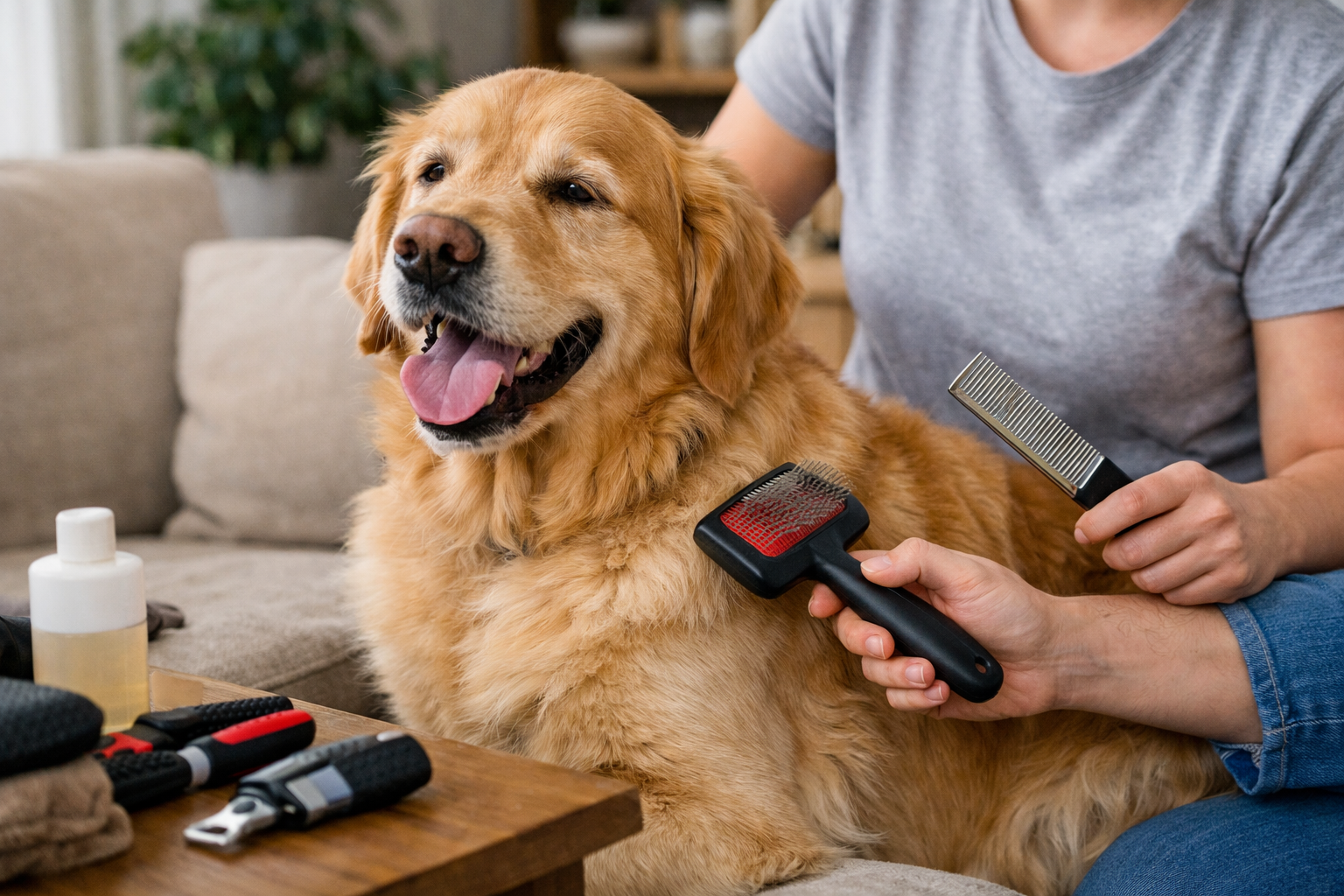
Grooming your dog at home can feel overwhelming at first. There are many tools available, and it is not always clear which ones truly matter and which ones simply create confusion. Understanding dog grooming tools is not about becoming a professional groomer. It is about learning how each tool supports your dog’s comfort, health, and daily well-being.
This guide explains the most important dog grooming tools, how they are used, and why they matter. Everything here is written for dog owners who want calm, safe, and effective home grooming.
Why Understanding Dog Grooming Tools Matters
Dogs rely on us to notice small changes in their skin, coat, and overall condition. The right grooming tools help you do that. When you use appropriate tools, grooming becomes less stressful for your dog and more predictable for you.
Poor tools or incorrect use can cause discomfort, pulling, or even minor injuries. Knowing what each tool does helps you avoid those problems and build trust during grooming sessions.
Brushes and Combs: The Foundation of Grooming
Brushes and combs are the most commonly used dog grooming tools. They help remove loose hair, prevent matting, and keep the coat clean.
Slicker brushes are useful for removing tangles and loose fur, especially during shedding periods. Bristle brushes are gentle and work well for smoothing the coat and distributing natural oils. Combs help reach areas that brushes may miss, such as behind the ears or around the legs.
Choosing the right brush or comb depends on your dog’s coat type, but understanding how each one works is more important than owning many tools.
Nail Clippers and Grinders
Nail care is often the most stressful part of grooming, yet it is one of the most important. Overgrown nails can affect how your dog walks and may cause pain over time.
Traditional nail clippers are effective when used carefully and slowly. Nail grinders allow more control and help smooth rough edges, reducing the risk of cutting too short. Whichever tool you choose, calm handling and patience matter more than speed.
Regular nail care helps your dog move comfortably and prevents long-term joint stress.
Dog Shampoos and Bathing Tools
Not all shampoos are safe for dogs. Dog-specific shampoos are designed to protect the skin’s natural balance. Using human products can dry out the skin and cause irritation.
Bathing tools such as gentle scrubbers or soft cloths help clean without scratching. The goal is not to over-bathe but to clean when needed and rinse thoroughly.
Bath time should feel calm and controlled, not rushed or forceful.
Clippers and Scissors
Clippers and scissors are used for trimming and maintaining coat length. Clippers are useful for even trimming, while scissors allow careful shaping around sensitive areas like the face and paws.
It is important to use tools designed specifically for dogs, as they are made to handle different coat textures safely. Always move slowly and watch your dog’s reactions during trimming.
For many dog owners, light trimming is enough to keep the coat manageable between professional grooming visits.
Ear and Dental Care Tools
Ear cleaning tools help remove dirt and wax buildup that can lead to infections. These tools should be used gently and only as recommended for dogs.
Dental tools such as dog toothbrushes and toothpaste support oral health and help prevent long-term issues. Dental care is often overlooked, but it plays a major role in your dog’s overall health.
Short, consistent routines work better than occasional deep cleaning.
How to Build a Calm Grooming Routine
Understanding dog grooming tools is only part of the process. The way you use them matters just as much. Grooming should feel predictable and safe for your dog.
Start with short sessions, use calm movements, and reward cooperation with gentle praise. Over time, your dog learns that grooming is not something to fear.
Consistency builds trust, and trust makes grooming easier for both of you.
Final Thoughts
Dog grooming tools are not about perfection or appearance. They are about comfort, health, and connection. When you understand what each tool does and why it matters, grooming becomes a shared routine instead of a struggle.
By using the right tools with patience and care, you support your dog’s well-being and strengthen the bond you share.