
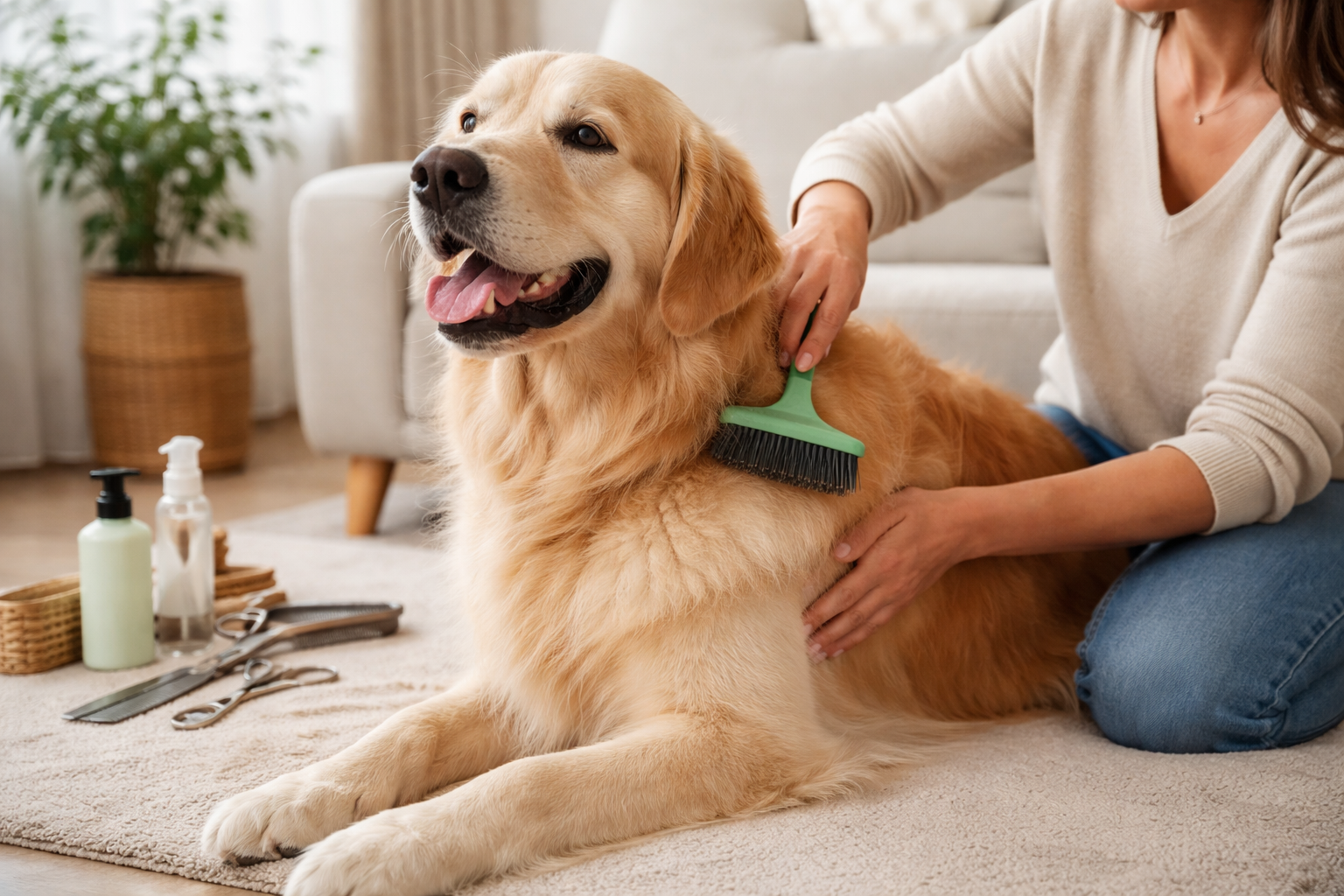
How Often Should You Groom Your Dog?
Grooming isn’t just about keeping your dog looking good. It’s one of the simplest ways to protect their health, comfort, and emotional well-being. Many dog owners ask the same question: how often should I groom my dog? The honest answer is—it depends. Your dog’s coat type, lifestyle, and skin sensitivity all play a role.
Understanding the right grooming schedule helps prevent painful mats, skin infections, and unnecessary stress for both you and your dog.
Why Grooming Frequency Matters
Regular grooming does more than remove loose hair. It allows you to notice early signs of problems like:
Dry or irritated skin
Parasites such as ticks or fleas
Lumps, wounds, or infections
Changes in coat texture or shedding patterns
Dogs that are groomed consistently tend to be calmer during the process because it becomes part of their routine rather than a stressful event.
Grooming Frequency by Coat Type
Short-Haired Dogs
Short-haired dogs generally need less frequent grooming, but that doesn’t mean no grooming at all.
Brushing: Once a week
Bathing: Every 4–6 weeks or when dirty
Nail trimming: Every 3–4 weeks
Even short coats shed and collect dirt. Regular brushing helps keep skin healthy and reduces loose hair around the home.
Medium-Haired Dogs
Medium coats require a bit more attention, especially around areas where hair tangles easily.
Brushing: 2–3 times per week
Bathing: Every 4–6 weeks
Trimming: As needed around ears, paws, and tail
Skipping grooming can quickly lead to knots, which can pull on the skin and cause discomfort.
Long-Haired Dogs
Long-haired dogs need the most consistent grooming to stay comfortable.
Brushing: Daily or every other day
Bathing: Every 3–4 weeks
Trimming: Every 6–8 weeks
Without regular care, mats can form close to the skin, trapping moisture and causing irritation or infections.
Other Factors That Affect Grooming Frequency
Lifestyle and Activity Level
Dogs that spend a lot of time outdoors will need grooming more often than indoor dogs. Dirt, sand, and debris can build up quickly and irritate the skin.
Skin Sensitivity
Dogs with allergies or sensitive skin may need gentler products and slightly adjusted grooming schedules to avoid dryness or flare-ups.
Seasonal Changes
Shedding often increases during seasonal transitions. During these times, more frequent brushing helps manage loose hair and keeps your dog comfortable.
Signs Your Dog Needs Grooming Sooner
Your dog may not be able to tell you directly, but their body gives clues:
Strong odor
Excessive scratching or licking
Visible mats or tangles
Dull or greasy coat
Long nails clicking on the floor
If you notice any of these, it’s time for grooming—even if it’s earlier than planned.
Creating a Grooming Routine Your Dog Trusts
Consistency is key. Groom your dog in a calm environment, using gentle movements and familiar tools. Short, positive sessions build trust over time. Many dogs come to enjoy grooming once they associate it with comfort and attention rather than stress.
Final Thoughts
There’s no one-size-fits-all answer to how often you should groom your dog. The right schedule depends on coat type, lifestyle, and individual needs. What matters most is paying attention to your dog and responding before small issues turn into big problems.
Regular grooming is one of the simplest ways to show care—and your dog feels the difference.