
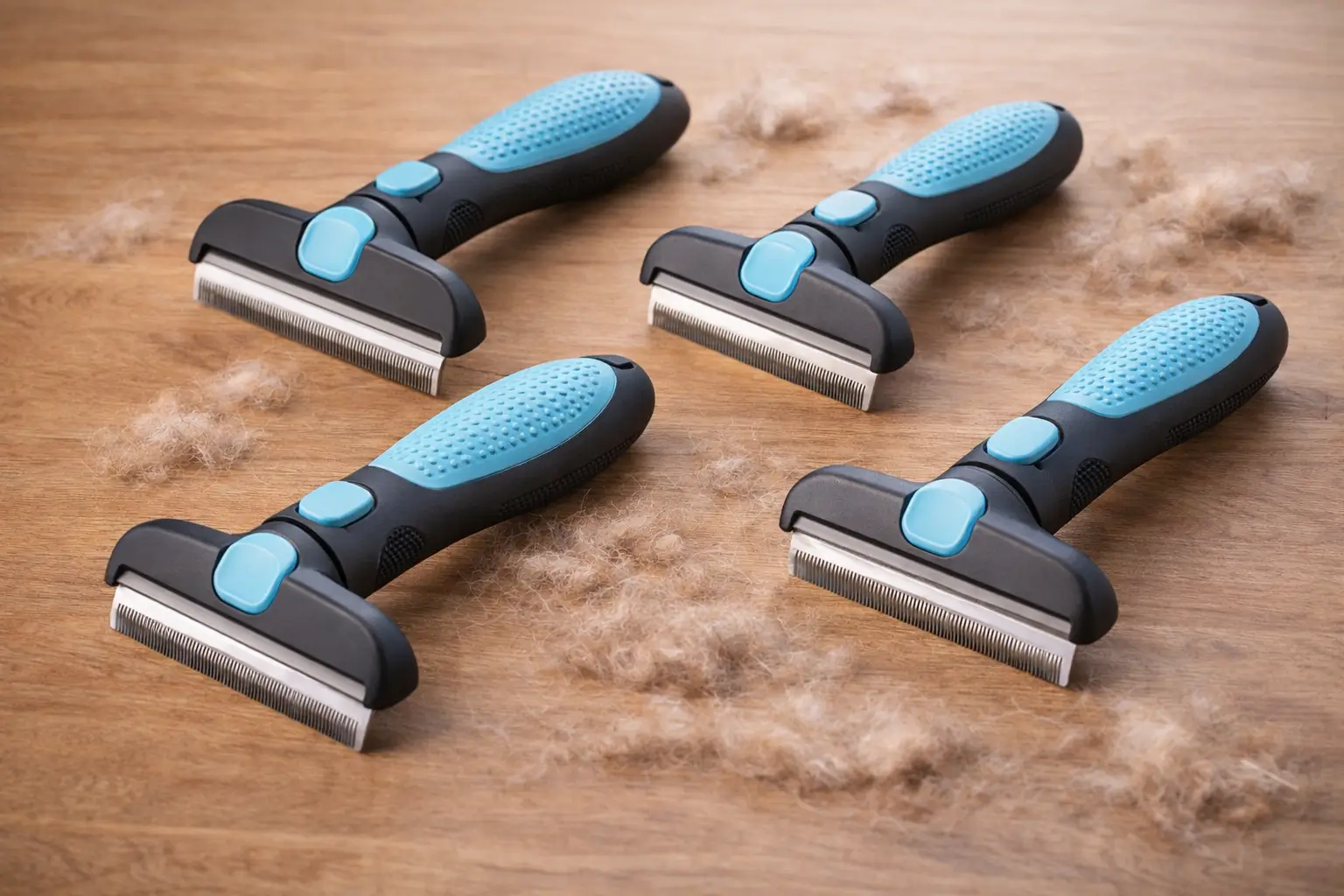
If you own a short-haired dog, you may have been told that shedding isn’t a big deal. The truth hits fast: it is. Short coats shed just as much as long coats, and because the hairs are smaller and sharper, they stick to furniture, clothes, rugs, and car seats more aggressively. For many owners, shedding becomes a daily frustration. That’s why choosing the right deshedding tool matters. It’s not just about appearance, it’s about reducing loose hair at home and improving your dog’s comfort, This Detail is best deshedding tools for short-haired dogs in 2025.
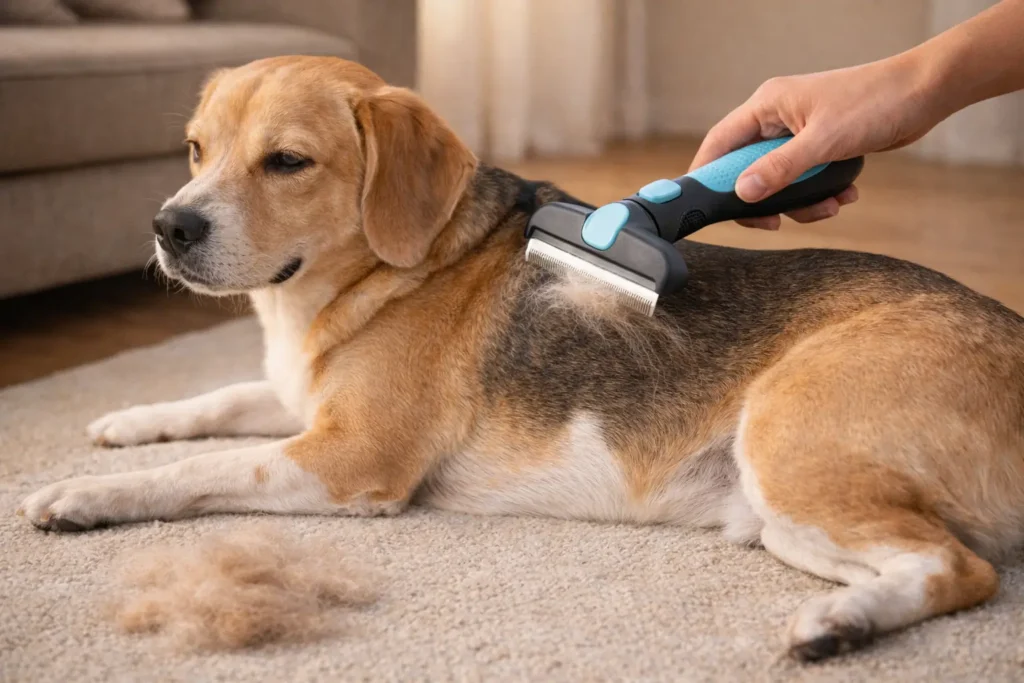
Why Short-Haired Dogs Shed More Than People Expect
Unlike long coats, which mat and tangle visibly, short coats often shed continuously. The hair is dense, close to the skin, and tends to fall in fine layers. Many owners mistake this for normal shedding when in fact a lack of grooming allows loose hair to build up, causing itchiness, dull coat shine, and discomfort.
Short-haired breeds such as Boxers, Pugs, Beagles, Dalmatians, and Pitbulls have double or dense single coats. The undercoat loosens during seasonal changes, while the topcoat releases short fibers constantly. Deshedding tools designed for long coats often scratch or cause discomfort on short coats. That’s why choosing the right tool is crucial.
What Makes a Good Deshedding Tool for Short Coats
A high-quality deshedding tool should remove loose undercoat without scraping the skin or causing static. For short coats, gentleness matters more than force. The tool should glide with minimal friction and avoid sharp teeth.
Key features to look for:
- rounded or protected edges
- short, gentle blades
- ergonomic handle
- safe for sensitive skin
- effective on small loose hair
The difference between a great tool and a cheap one is how your dog reacts. If your dog flinches, moves away, or shows anxiety, the tool may be too harsh.
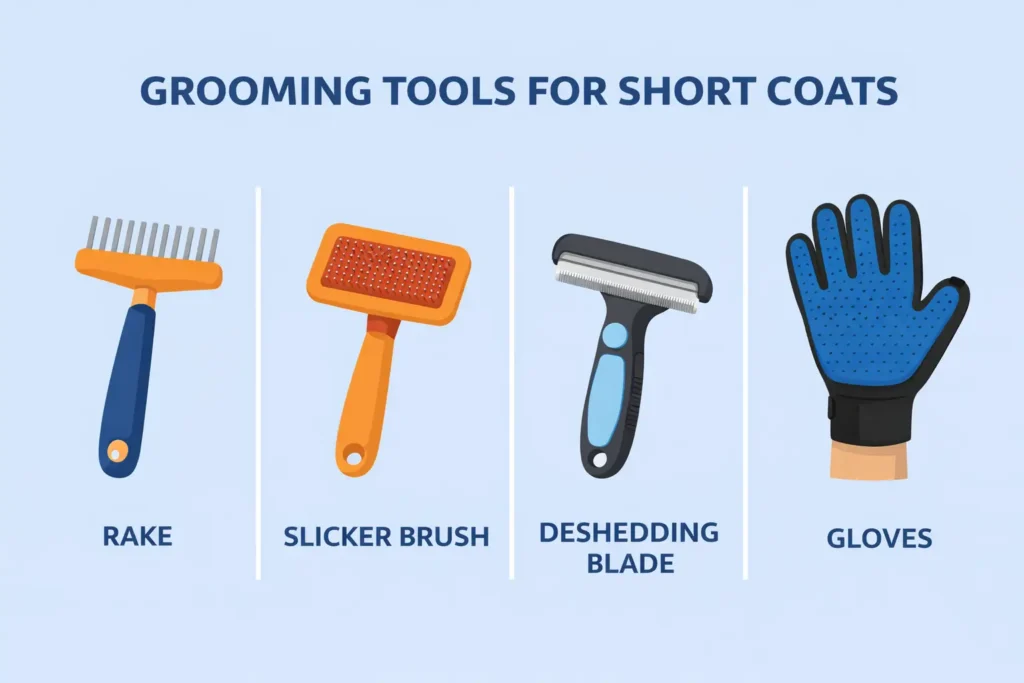
Top Deshedding Tools for Short-Haired Dogs in 2025
Here are the leading options that performed best for short coats during testing.
1. Furminator Short Hair Version
This remains a reliable choice thanks to its gentle design and undercoat focus. Many owners worry about scratching, but the short-hair version has a guard that prevents digging into the skin.
Strengths:
- removes loose undercoat effectively
- comfortable grip
- built-in hair release button
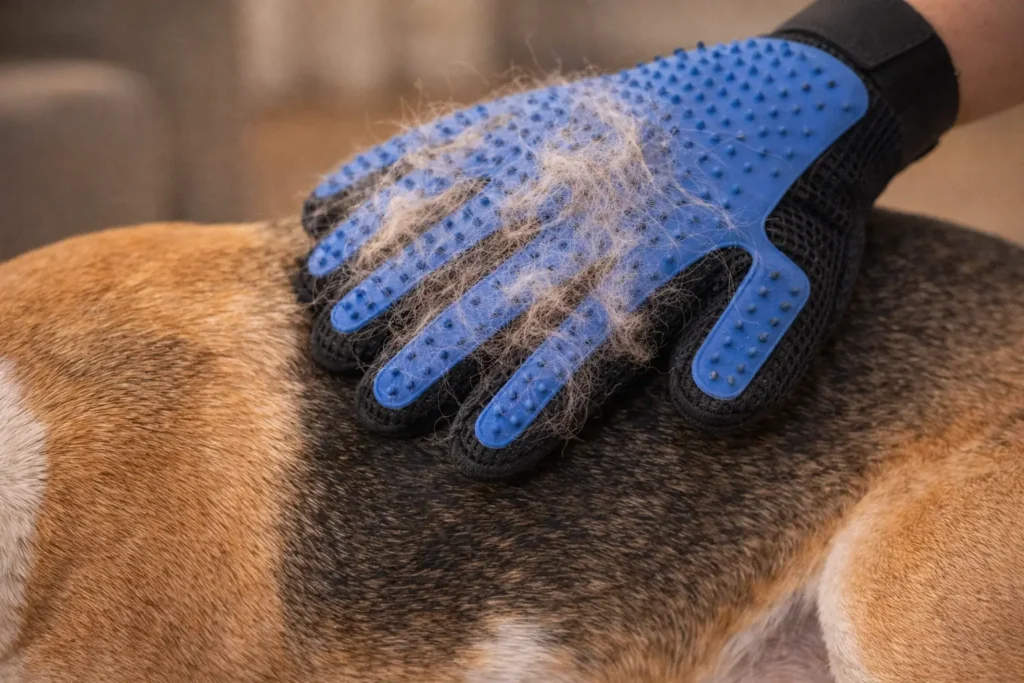
2. Deshedding Gloves
If your dog dislikes brushes, gloves are ideal. They mimic petting and reduce stress. The downside is that they are less effective during heavy shedding, but they shine for weekly maintenance.
Best for:
- anxious dogs
- sensitive skin
- puppies
3. Slicker Brush with Soft Pins
Slicker brushes with gentle pins work surprisingly well on short coats when used properly. They remove surface hair and stimulate natural skin oils.
4. Rubber Curry Brush
Perfect for bath time. It loosens undercoat, cleans hair, and massages the dog. It doesn’t reach deep undercoat but is excellent for routine grooming.
How to Choose the Right Tool for Your Dog
Consider Coat Density
Some short-haired breeds have very dense undercoats, like Dalmatians, while others shed less but produce more surface debris. Understanding coat density helps you match tool strength.
Consider Skin Sensitivity
If your dog has allergies or thin skin, gloves or rubber brushes may be safer.
Consider Grooming Frequency
For heavy shedders, the Furminator short hair model or a slicker brush will remove loose hair. For light shedders, gloves may be enough.
Technique Matters
Short coats do not require long strokes. Short, controlled movements prevent skin irritation. Avoid brushing against coat direction as it causes discomfort.
Grooming Routine for Short-Haired Dogs
A routine matters more than tool choice. Consistency improves results, reduces shedding, and prevents hair buildup.
Recommended schedule:
- twice per week year-round
- daily during shedding seasons
- short sessions: 5–10 minutes
Bathing before deshedding loosens hair. Dry coat fully before brushing to avoid irritation.
Mistakes to Avoid
Owners commonly:
- press too hard
- use long-coat tools on short coats
- skip bathing
- brush wet coats
- groom too fast
The most common mistake is assuming short coats do not require proper grooming.
Benefits Beyond Shedding
When deshedding is done right:
- coat shine improves
- skin health strengthens
- dander decreases
- bonding increases
- reduced allergens indoors
Many owners discover that grooming becomes a calming routine for the dog, especially when paired with treats and slow introduction.
Cost and Value
Short-coated dogs are often cheaper to groom at home than through professional services. A good deshedding tool saves money over time and reduces the need for grooming visits. Gloves are affordable; Furminator is pricier but durable. Rubber brushes offer value for bath and daily touch-ups.
Final Verdict
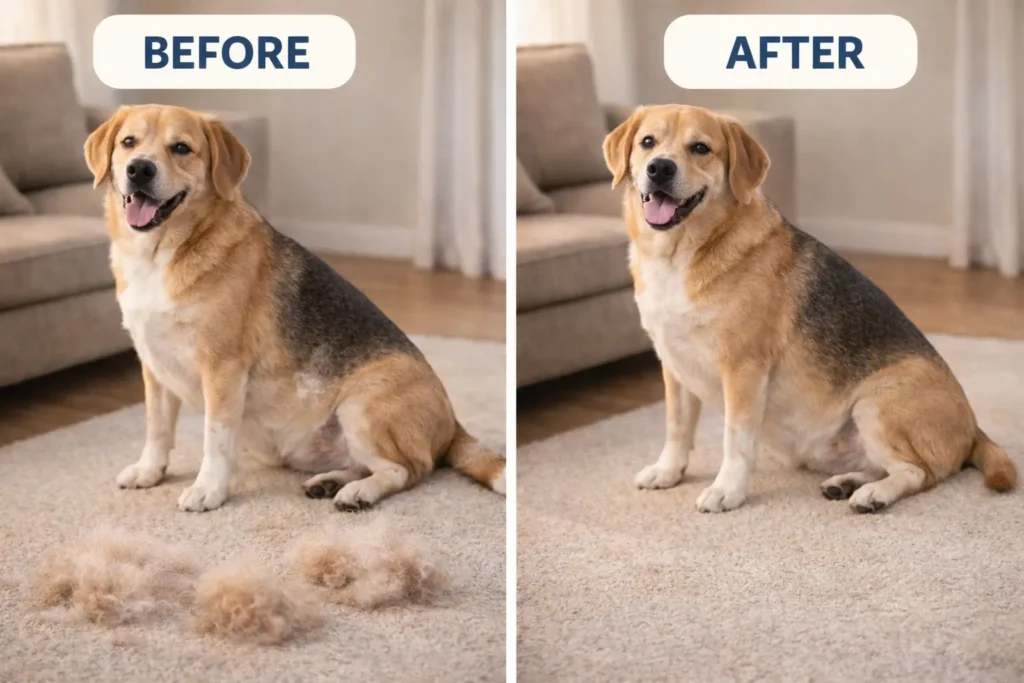
Short-haired dogs shed more than most owners expect, and a proper deshedding routine can completely change the home environment. Whether you choose a Furminator short hair version for deeper undercoat removal, slicker brushes for gentle weekly grooming, or gloves for anxious dogs, the right tool reduces shedding, improves comfort, and protects coat health.
In summary:
Short coats need deshedding just as much as long coats.
With the right tool and routine, shedding becomes manageable instead of overwhelming.