
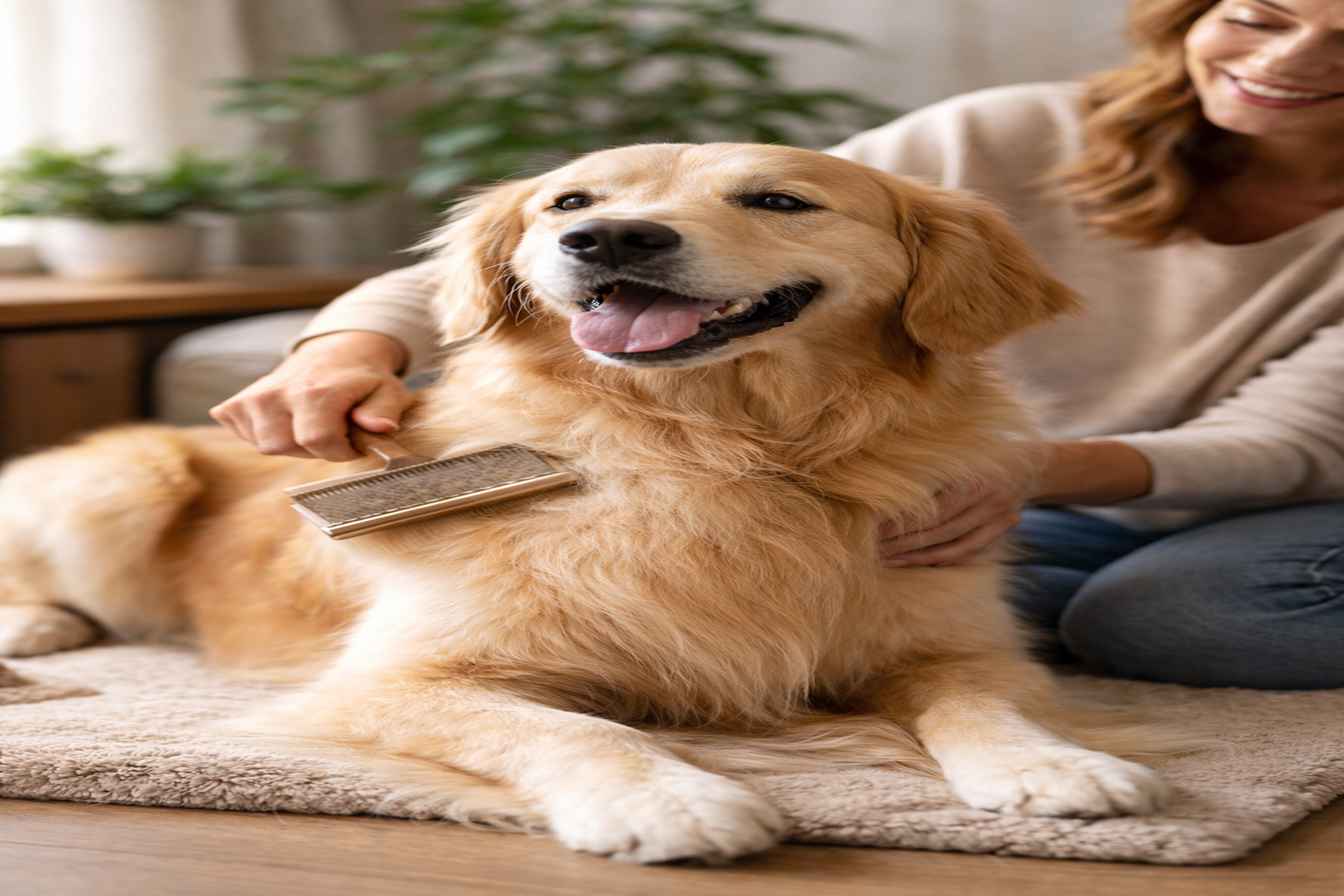
Dog Coat Types and Grooming Needs
Every dog owner eventually learns that grooming is not a one-size-fits-all routine. A dog’s coat type plays a major role in how often grooming is needed, what tools work best, and how to keep the dog comfortable and healthy. Understanding different dog coat types helps owners provide care that fits their dog’s natural needs, rather than working against them.
This guide walks through the most common dog coat types and explains how grooming needs change with each one, based on real-life, at-home care experience.
Why Dog Coat Type Matters
A dog’s coat does more than affect appearance. It protects the skin, regulates body temperature, and reflects overall health. When grooming routines don’t match the coat type, dogs may experience matting, skin irritation, excessive shedding, or discomfort.
By matching grooming habits to coat type, owners can reduce stress for their dogs and make grooming feel like a calm, familiar part of daily life.
Short-Coated Dogs
Short-coated dogs have smooth, close-lying fur that sits near the skin. While they are often considered “low maintenance,” they still benefit from regular care.
Grooming short-coated dogs helps remove loose hair, distribute natural oils, and keep the skin healthy. A gentle brushing session once or twice a week is usually enough. Baths should be occasional, focusing more on cleanliness than coat management.
Because their skin is more exposed, it’s important to check for dryness, irritation, or sensitivity during grooming.
Medium-Coated Dogs
Medium-coated dogs have denser fur that provides more insulation and protection. This coat type can trap dirt and shed more noticeably, especially during seasonal changes.
Regular brushing, a few times per week, helps prevent tangles and reduces shedding around the home. Grooming sessions also give owners a chance to notice changes in coat texture or skin condition early.
Consistency matters most here—skipping grooming can quickly lead to knots or excessive hair buildup.
Long-Coated Dogs
Long-coated dogs require the most hands-on grooming. Their fur can mat easily if not maintained, especially around the ears, legs, and tail.
Daily or near-daily brushing helps keep the coat smooth and comfortable. Grooming should be calm and unhurried, allowing the dog to relax and trust the process. Bathing should be followed by careful drying to avoid moisture getting trapped in the coat.
For long-coated dogs, grooming is as much about comfort as it is about appearance.
Curly and Wavy Coats
Dogs with curly or wavy coats often have hair that grows continuously rather than shedding heavily. This coat type can hide mats close to the skin if grooming is irregular.
Frequent brushing and routine trimming help keep the coat manageable. Grooming sessions should focus on gentle detangling and checking the skin underneath the curls.
A steady grooming rhythm helps prevent discomfort and keeps the coat soft and healthy over time.
Double-Coated Dogs
Double-coated dogs have a dense undercoat beneath a longer outer layer. This coat is designed for insulation and protection but can shed heavily, especially during seasonal changes.
Regular brushing is essential to remove loose undercoat hair and allow air to circulate. Shaving is generally not recommended, as it can interfere with the coat’s natural function.
Grooming double-coated dogs takes patience, but it plays a big role in keeping them cool, clean, and comfortable.
Grooming as a Bonding Experience
Regardless of coat type, grooming should feel calm and familiar—not rushed or stressful. Dogs respond best when grooming is treated as a shared routine rather than a chore.
Over time, regular grooming builds trust, helps owners notice health changes early, and supports a dog’s overall well-being. When grooming matches the coat’s natural needs, both the dog and the owner benefit.
Final Thoughts
Understanding dog coat types and grooming needs allows owners to care for their dogs with confidence and empathy. Instead of following generic advice, focusing on the dog’s specific coat leads to better comfort, healthier skin, and a more relaxed grooming experience at home.
A well-groomed coat is not just about looks—it’s a reflection of thoughtful, informed care.